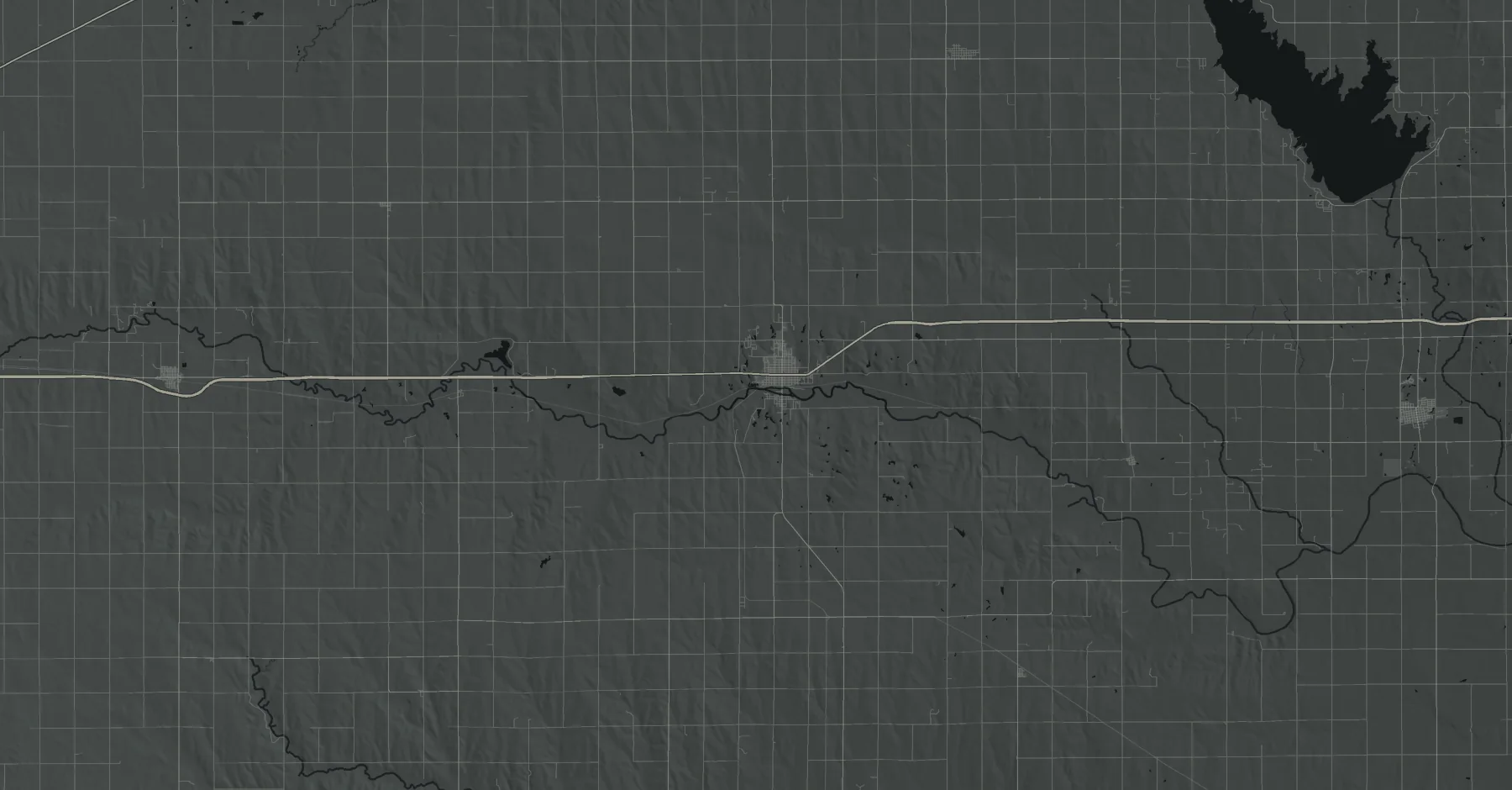
Map of the Honey Badger 100 course, Cheney, Kansas
GIEFER CREEKNW 10TH AVETRAVEL STOPST. LEO5 MILES · NORTH IS UP
The course · 100 mi · Road
100 ftGiefer Creekmile 0NW 10th AveTravel stopmile 45St. Leomile 53.35
Start to finish · 1,346 to 1,784 ft · asphalt roads
Kansas ultramarathon · running since 2014

Honey Badger 100

July 10 to 11, 2027 · Cheney, Kansas
Registration open · closes July 7

A 100-mile road race that starts and finishes on the west shore of Cheney State Park. About 6 miles run inside the park, roughly 92.9 on Kingman County roads, and the last mile comes back in.

Distance
  • Starts6:00 AM SaturdayGiefer Creek Day Use Area, Cheney State Park west…
  • Time limit36 hoursfinish by 6:00 PM Sunday
  • Deciding cutoffSt. Leo by midnight20:15 a mile
  • Night runningYesno lights rule published
  • Finished in 20258starters are not published
no refunds
Map of the Honey Badger 100 course, Cheney, Kansas
GIEFER CREEK
Start to finish · 1,346 to 1,784 ft · asphalt roads
Kansas ultramarathon · running since 2014
Honey Badger 100
July 10 to 11, 2027
Registration open · closes July 7
Distance
  • Starts6:00 AM SaturdayGiefer Creek Day Use Area, Cheney State Park west…
  • Time limit36 hoursfinish by 6:00 PM Sunday
  • Deciding cutoffSt. Leo by midnight20:15 a mile
  • Night runningYesno lights rule published
  • Finished in 20258starters are not published

The course

Loop.

Asphalt roads. The course sits between 1,346 and 1,784 ft. Two July days on county roads; the 12 gallons of water and 30 lb of ice are the organizer's minimum.

GIEFER CREEK0ST. LEO53.35100 ftElevationlow point, 1,346 fthigh point, 1,784 ftSurfaceAsphalt roadsAid
TechnicalityVery lowRoad footing the whole way.
ExposureHighTwo July days on county roads; the 12 gallons of water and 30 lb of ice are the organizer's minimum.
Night runningYesA 6 AM start and a 36-hour limit: the fastest finish on record took about 16½ hours, so every finisher runs after dark on open roads.
Road crossingsOpen roadsThe course shares county roads with traffic; the 2020 booklet had runners on the left, facing it.
Mud riskNonePavement.
The course
Loop.

Asphalt roads. The course sits between 1,346 and 1,784 ft. Two July days on county roads; the 12 gallons of water and 30 lb of ice are the organizer's minimum.

GIEFER CREEKST. LEOElevationlow point, 1,346 fthigh point, 1,784 ftSurfaceAsphalt roadsAid
TechnicalityVery lowRoad footing the whole way.
ExposureHighTwo July days on county roads; the 12 gallons of water and 30 lb of ice are the organizer's minimum.
Night runningYesA 6 AM start and a 36-hour limit: the fastest finish on record took about 16½ hours, so every finisher runs after dark on open roads.
Road crossingsOpen roadsThe course shares county roads with traffic; the 2020 booklet had runners on the left, facing it.
Mud riskNonePavement.

Aid stations and cutoffs

St. Leo decides it. Leave mile 53.35 by midnight, which is 20:15 a mile from the start. No other cutoff asks for a faster pace.

Longest stretch without aid46.65 miles, St. Leo to Giefer Creek
CrewRequired
PacersNot addressed
CupsNot addressed
MilePlaceWhat is thereCrewDrop bagPacerCutoffPace it takes from the start
0
Giefer Creek
Packet pickup 5:30 AM. Briefing.
~45
Travel stop
Water only
~53.35
St. LeoDecides it18-hour cutoff
No aid published. The 2027 listing gives the mile, not the place; earlier editions held the checkpoint at St. Leo.
midnightSunday · 18 hours in
20:15/mi
100
Giefer Creek
Buckle.
6:00 PMSunday · finish · 36 hours in
21:36/mi
Aid stations and cutoffs

St. Leo decides it. Leave mile 53.35 by midnight, which is 20:15 a mile from the start. No other cutoff asks for a faster pace.

Longest stretch without aid46.65 miles, St. Leo to Giefer Creek
CrewRequired
PacersNot addressed
CupsNot addressed
MilePlace and cutoff
0
Giefer CreekCrew
~45
Travel stop · water only
~53.35
St. LeoCrew
leave by midnight20:15/mi
100
Giefer CreekCrew
finish by 6:00 PM21:36/mi

Pace plan

For the 100 mi.
Finish in
33:25
3:25 PM Sunday
Suggested: the slowest even plan with two minutes in hand at every cutoff33:25
Your changesnone
Climb on the mapped trail2,460 ft

0:04 in hand at St. Leo. The tightest point on this plan.

Even effortEven paceFade 20%
Copy plan for crewReset my changes
LegMilesClimb · dropProfileLeg time · editableArriveCutoffIn hand
Giefer Creek to St. Leomile 0 to 53.35
53.35
+1,398 −1,070 ft
17:56
11:56 PM
midnight
0:04
St. Leo to Giefer Creekmile 53.35 to 100
46.65
+1,064 −1,389 ft
15:29
3:25 PM
6:00 PM
2:35
Pace plan
Finish in
33:25
3:25 PM Sunday
Suggested: the slowest even plan with two minutes in hand at every cutoff33:25
Your changesnone
Climb on the mapped trail2,460 ft

0:04 in hand at St. Leo. The tightest point on this plan.

Even effortEven paceFade 20%
Copy plan for crewReset my changes
Giefer Creek to St. Leo53.35 mi · +1,398 / −1,070 ft
17:56
11:56 PM0:04
St. Leo to Giefer Creek46.65 mi · +1,064 / −1,389 ft
15:29
3:25 PM2:35

Weather

Race hours on July 10 to 11 at Cheney, 2016 to 2026.

Felt 95° or hotter in 10 of 11 years. 90° or warmer in 9 of 11. 70° or warmer all night in 6 of 11.

In race hours, did it happen?
’16’17’18’19’20’21’22’23’24’25’26
YearsThe extreme
Rain in race hoursa tenth of an inch or more
1of 11
Most: 0.2 in, 2020
90° or warmerat the warmest hour
9of 11
Warmest: 100°, 2022
Felt 95° or hotterwith the humidity
10of 11
Felt like 107° in 2022
70° or warmer all nightno cooling after dark
6of 11
Warmest night: never under 74°
Gusts of 35 mph or moreat some point in the race window
1of 11
Strongest: 44 mph, 2016

The typical year: 92° at the warmest hour, 73° at the coldest, feeling like 77°.

By the hour6 AM Saturday to 6 PM Sunday, every year since 2016
70°80°90°100°6 AM9 AMnoon3 PM6 PM9 PMmidnight3 AM6 AM9 AMnoon3 PM6 PM2023: 64°2022: 100°typical 92°typical 73°DARK · SUNSET 8:55 PMSUNRISE 6:19 AMYEARS WITH RAIN IN THAT HOUR, OF 11YEARS WITH RAIN IN THAT HOUR, OF 1111111111111WIND · ARROWS POINT THE WAY IT BLOWS, NORTH UP · TYPICAL MPHWIND · ARROWS POINT THE WAY IT BLOWS, NORTH UP · TYPICAL MPH579910898889710
Weather
Race hours on July 10 to 11 at Cheney, 2016 to 2026.

Felt 95° or hotter in 10 of 11 years. 90° or warmer in 9 of 11. 70° or warmer all night in 6 of 11.

’16’17’18’19’20’21’22’23’24’25’26
Rain in race hoursa tenth of an inch or more
1of 11
Most: 0.2 in, 2020
90° or warmerat the warmest hour
9of 11
Warmest: 100°, 2022
Felt 95° or hotterwith the humidity
10of 11
Felt like 107° in 2022
70° or warmer all nightno cooling after dark
6of 11
Warmest night: never under 74°
Gusts of 35 mph or moreat some point in the race window
1of 11
Strongest: 44 mph, 2016

The typical year: 92° at the warmest hour, 73° at the coldest, feeling like 77°.

By the hour6 AM Saturday to 6 PM Sunday, every year since 2016
70°80°90°100°6 AMnoon6 PMmidnight6 AMnoon6 PM2023: 64°2022: 100°typical 92°typical 73°DARKYEARS WITH RAIN THAT HOUR, OF 11YEARS WITH RAIN THAT HOUR, OF 11WIND · THE WAY IT BLOWS · MPHWIND · THE WAY IT BLOWS · MPH591098910

Gear

For the 100 mi.

Every item answers something on this page. Four are required by the race. The rest follow from the trail, the weather and a very long day.

The rules
Requiredby the race rules
→
A crew and a vehicleRequired

The race has no aid stations in its 2027 listing. Every runner must bring at least one crew member and a vehicle, and only one crew vehicle at a time.

All your foodRequired

The rule lists food with the water and ice: nothing is served on the course.

$5 for the park day-use feeRequired

Charged per vehicle unless you are staying in the park overnight. The crew vehicle needs it before the start.

The trail
46.6 miis the longest stretch without aid
→
12 gallons of water, 30 lb of iceRequired

The organizer's minimum in the crew vehicle. Refilling both during the race is the crew's job.

100 miof asphalt roads
→
Road shoesWorth bringing

100 miles of pavement with no technical footing. Cushion matters; lugs do not.

The weather
92°at the warmest hour in a typical year
→
Sun hat and sunscreenWorth bringing

Median highs of 90°F on July 10 and 92°F on July 11, and runners report no shade on the county roads once you leave the park. Heat is the story here.

The long day
36 his the time limit
→
Extra 5-gallon cooler and a large ice chestWorth bringing

The organizer's advice when more than one crew member is helping. A gift card for ice at the travel stop near mile 45 comes with the entry.

10 hof dark inside the time limit, sunset to sunrise
→
Headlamp, plus a backup lightWorth bringing

Strongly advised: the course runs through the night on open county roads. The 2027 listing is silent on lights; the 2020 booklet, from the previous organizer, made one mandatory from 8 PM to 6 AM. Sunset is about 8:55 PM.

Reflective vestWorth bringing

Strongly advised: you share open county roads with traffic after dark. The 2020 booklet, from the previous organizer, required reflective gear after dark; the 2027 listing does not say.

Gear
For the 100 mi.

Every item answers something on this page. Four are required by the race. The rest follow from the trail, the weather and a very long day.

The rules
Requiredby the race rules
→
A crew and a vehicleRequired

The race has no aid stations in its 2027 listing. Every runner must bring at least one crew member and a vehicle, and only one crew vehicle at a time.

All your foodRequired

The rule lists food with the water and ice: nothing is served on the course.

$5 for the park day-use feeRequired

Charged per vehicle unless you are staying in the park overnight. The crew vehicle needs it before the start.

The trail
46.6 miis the longest stretch without aid
→
12 gallons of water, 30 lb of iceRequired

The organizer's minimum in the crew vehicle. Refilling both during the race is the crew's job.

100 miof asphalt roads
→
Road shoesWorth bringing

100 miles of pavement with no technical footing. Cushion matters; lugs do not.

The weather
92°at the warmest hour in a typical year
→
Sun hat and sunscreenWorth bringing

Median highs of 90°F on July 10 and 92°F on July 11, and runners report no shade on the county roads once you leave the park. Heat is the story here.

The long day
36 his the time limit
→
Extra 5-gallon cooler and a large ice chestWorth bringing

The organizer's advice when more than one crew member is helping. A gift card for ice at the travel stop near mile 45 comes with the entry.

10 hof dark inside the time limit, sunset to sunrise
→
Headlamp, plus a backup lightWorth bringing

Strongly advised: the course runs through the night on open county roads. The 2027 listing is silent on lights; the 2020 booklet, from the previous organizer, made one mandatory from 8 PM to 6 AM. Sunset is about 8:55 PM.

Reflective vestWorth bringing

Strongly advised: you share open county roads with traffic after dark. The 2020 booklet, from the previous organizer, required reflective gear after dark; the 2027 listing does not say.

Race week

Two lists, one for each of you. What the runner has to do, and what the crew can and cannot do.

Start6:00 AM SaturdayGiefer Creek Day Use Area, Cheney State Park west shore
Packet pickupSaturday 5:30 AM at the startNo earlier pickup published.
Finish line closes6:00 PM Sunday36 hours after the start
If you are running
BriefingShort briefing after the 5:30 AM packet pickup

Then straight into the start.

Packet pickupSaturday 5:30 AM at the start

No earlier pickup published.

If you are crewing
CrewRequired

At least 1 person and a vehicle.

Aid from crewAll of it

One crew vehicle at a time.

ParkingIn the park; spot not published

Vehicle permit $5 a day, at the gate or online. Not needed if staying in the park, per the race.

BedsCamp or take a cabin beside the start; hotels in Goddard and Kingman, about 20 mi

Wichita, a little over 30 mi, has the most hotels. See the map.

HospitalsKingman Healthcare Center

750 W D Ave, Kingman. 24/7 ER. 17 mi straight-line west. Ascension Via Christi St. Teresa, west Wichita, is 17 mi east.

Flying inWichita (ICT)

About 22 mi straight-line east of the start.

Saturday, July 10

Race day

Packet pickup 5:30 AM

Start 6:00 AM

Sunday, July 11

Finish closes 6:00 PM

36 h from the start

Not addressed in the rules: drop bags, cups, lights, pacers, poles · headphones and dogs.

Runner reports

From runners’ own race reports and videos.

What runners say about it. 13 things reported between 2015 and 2026, the most repeated first.

Heat differs by year

One report gives 104°F in 2020 and another close to 100°F in 2015. In 2025 one finisher recorded a peak near 83°F under early cloud, with 83% humidity at the start.

201520202025
Wind

In 2015 a finisher met a steady hot headwind on a southbound stretch of about 14 miles from near mile 38. In 2018 a south breeze made the day bearable until it dropped. A 2024 crew found the wind strong late in the race.

201520182024
Cooling

A 2015 finisher soaked his hat in ice water at stops and used wet towels. Later runners describe ice in the hat and shirt, and an ice pack in the back of a vest where the bladder would go.

201520232026
The mile 53 cutoff

A 2015 finisher reached it with 10 minutes to spare. A 2018 runner stopped at mile 34 with a sore knee once the pace needed was out of reach, and a 2026 runner, pressed by the cutoff, stopped at mile 50 with an ankle injury. The limit there was 16 hours in 2018 and is 18 hours now.

201520182026
Miles 27 and 28

Three reports place the first bad patch in the high 20s: stomach trouble at mile 27 in 2015, a hot spot and a slowing pace at 27 in 2018, and a low point at 28 in 2026.

201520182026
No shade

A 2015 finisher put it as "Simply asphalt. Simply hot. Simply no shade." A 2026 runner describes open fields where you can see forever.

20152026
The long straight

After the park miles the course runs west on one road. Our map measures 32.5 miles from the park gate to the first turn. A 2018 runner remembered it as no turns and no curves, and a 2026 runner was glad to see the end of it.

20182026
How often crews stop

A 2015 crew drove ahead about every 2 miles, and every mile on the headwind stretch. A 2018 runner met his crew every 3 to 4 miles, with stops of about a minute.

20152018
The second day

In 2015 a finisher called Sunday hotter than Saturday. In 2025 one covered the last 13 miles under strong sun without sunscreen and finished sunburned.

20152025
Crew and pacers late

In 2020 a crew cooled their runner on a cot with a fan for about 5 hours at mile 67 and he went on to finish. A 2025 finisher used three pacers in turn from mile 53.

20202025
After dark

A 2023 crew describes it as a lot cooler once the sun was down, and stayed in the car between stops because of mosquitoes. They nearly lost the spare headlamp batteries at one stop.

2023
Course marking

At the 2024 start the race director told runners that arrows mark the corners and little else, because the course follows one road for miles: with no flag, do not turn.

2024
A small field

A 2026 runner counted 12 people signed up, with no crowds at the start.

2026
Ran this race?Add what you saw. It goes on this page with the year.Add your report
Runner reports
From runners’ own race reports and videos.

What runners say about it. 13 things reported between 2015 and 2026, the most repeated first.

Heat differs by year

One report gives 104°F in 2020 and another close to 100°F in 2015. In 2025 one finisher recorded a peak near 83°F under early cloud, with 83% humidity at the start.

201520202025
Wind

In 2015 a finisher met a steady hot headwind on a southbound stretch of about 14 miles from near mile 38. In 2018 a south breeze made the day bearable until it dropped. A 2024 crew found the wind strong late in the race.

201520182024
Cooling

A 2015 finisher soaked his hat in ice water at stops and used wet towels. Later runners describe ice in the hat and shirt, and an ice pack in the back of a vest where the bladder would go.

201520232026
The mile 53 cutoff

A 2015 finisher reached it with 10 minutes to spare. A 2018 runner stopped at mile 34 with a sore knee once the pace needed was out of reach, and a 2026 runner, pressed by the cutoff, stopped at mile 50 with an ankle injury. The limit there was 16 hours in 2018 and is 18 hours now.

201520182026
Miles 27 and 28

Three reports place the first bad patch in the high 20s: stomach trouble at mile 27 in 2015, a hot spot and a slowing pace at 27 in 2018, and a low point at 28 in 2026.

201520182026
No shade

A 2015 finisher put it as "Simply asphalt. Simply hot. Simply no shade." A 2026 runner describes open fields where you can see forever.

20152026
The long straight

After the park miles the course runs west on one road. Our map measures 32.5 miles from the park gate to the first turn. A 2018 runner remembered it as no turns and no curves, and a 2026 runner was glad to see the end of it.

20182026
How often crews stop

A 2015 crew drove ahead about every 2 miles, and every mile on the headwind stretch. A 2018 runner met his crew every 3 to 4 miles, with stops of about a minute.

20152018
The second day

In 2015 a finisher called Sunday hotter than Saturday. In 2025 one covered the last 13 miles under strong sun without sunscreen and finished sunburned.

20152025
Crew and pacers late

In 2020 a crew cooled their runner on a cot with a fan for about 5 hours at mile 67 and he went on to finish. A 2025 finisher used three pacers in turn from mile 53.

20202025
After dark

A 2023 crew describes it as a lot cooler once the sun was down, and stayed in the car between stops because of mosquitoes. They nearly lost the spare headlamp batteries at one stop.

2023
Course marking

At the 2024 start the race director told runners that arrows mark the corners and little else, because the course follows one road for miles: with no flag, do not turn.

2024
A small field

A 2026 runner counted 12 people signed up, with no crowds at the start.

2026
Ran this race?Add what you saw. It goes on this page with the year.Add your report

Connect with other runners

Runners who have said they’re interested in this race. Sign in with Strava to add yourself; tap a card to follow someone there and train toward the same start line. This is not registration: entries are taken on the race’s registration page.

Names and photos come from each runner’s public Strava profile, shown only after they tap Interested. Remove yourself any time. Powered by Strava.

Results

8 finished the 100 mi in 2025, the fewest on record. The most was 18, in 2018. Counted since 2014.

820141520151020161420171820181520191320201820211020228202315202482025
Finished in 20258the fewest on record
Most in a year182018
Course record, men16:282018
Course record, women18:342025
Fastest man, 202522:03
Fastest woman, 202523:38
Results

8 finished the 100 mi in 2025, the fewest on record. The most was 18, in 2018. Counted since 2014.

8’1415’1510’1614’1718’1815’1913’2018’2110’228’2315’248’25
Finished in 20258the fewest on record
Most in a year182018
Course record, men16:282018
Course record, women18:342025
Fastest man, 202522:03
Fastest woman, 202523:38

Where to stay

Miles are straight-line from the start.

Camp or take a cabin beside the start in Cheney State Park; the nearest hotels are in Goddard and Kingman, about 20 mi away by the race's figure.

HospitalStart · Giefer Creek Day Use Areacamping beside the startUS-54KS-96KS-615 MILES · NORTH IS UP
Cheney State Parkfor the runner · at the start · west shore
▲
Giefer Hill Campground

No hookups. Harding Hill also beside the start.

Cheney State Park West Shore
0.1 mi
▲
Cheney State Park cabins

Nine cabins, $100–150 Fri/Sat nights.

Cheney State Park West Shore
0.3 mi
▲
Smarsh Creek Campground

20 water-and-electric sites.

Cheney State Park West Shore
0.8 mi
Goddardabout 20 mi east, per the race
1
Hampton Inn West Wichita Goddard

Indoor pool. Free parking.

455 N Crowne Dr · 316-453-0444
about 20 mi
2
Rodeway Inn Goddard

Budget motel on US-54.

19941 W Kellogg Dr
about 20 mi
Where to stay
Miles are straight-line from the start.

Camp or take a cabin beside the start in Cheney State Park; the nearest hotels are in Goddard and Kingman, about 20 mi away by the race's figure.

HospitalStart · Giefer Creek Day Use Areacamping beside the startUS-54KS-96KS-615 MILES · NORTH IS UP
Cheney State Parkfor the runner · at the start · west shore
▲
Giefer Hill Campground

No hookups. Harding Hill also beside the start.

Cheney State Park West Shore
0.1 mi
▲
Cheney State Park cabins

Nine cabins, $100–150 Fri/Sat nights.

Cheney State Park West Shore
0.3 mi
▲
Smarsh Creek Campground

20 water-and-electric sites.

Cheney State Park West Shore
0.8 mi
Goddardabout 20 mi east, per the race
1
Hampton Inn West Wichita Goddard

Indoor pool. Free parking.

455 N Crowne Dr · 316-453-0444
about 20 mi
2
Rodeway Inn Goddard

Budget motel on US-54.

19941 W Kellogg Dr
about 20 mi

Quick answers

For the 2027 race.
What ultramarathon distances does Honey Badger 100 have?One: the 100 mile
What does crew-supported mean at Honey Badger 100?

The 2027 listing has no aid stations: every runner brings a crew of at least one person, a vehicle, all food, 12 gallons of water and 30 pounds of ice. Only one crew vehicle is allowed per runner at a time.

Where and when does it start?6:00 AM, Giefer Creek Day Use Area

At Giefer Creek Day Use Area on the west shore of Cheney State Park, with packet pickup at 5:30 AM and the start at 6:00 AM on Saturday, July 10, 2027. A short briefing follows pickup.

How long do I have to finish, and what is the cutoff?

The limit is 36 hours, so the course closes at 6:00 PM Sunday. The 18-hour cutoff is at about mile 53.35, at 12:00 AM Sunday, and the 2027 listing gives the mile but not the place; earlier editions held it at St. Leo.

How hot does it get?

On July 10 the median high over the last 11 years was 90°F, and on July 11 it was 92°F; 4 of those 11 years reached 95°F or more on one of the days. No overnight low fell below 64°F.

Do I need a light at night?

The 2027 listing does not address lights. Runners are out on open county roads after the 8:55 PM sunset, so a headlamp and a reflective vest are strongly advised; the 2020 booklet, from the previous organizer, required both.

Where can I camp or stay near the start?

Cheney State Park has campgrounds and nine cabins beside the start, and hotels in Goddard and Kingman are about 20 miles away. The park day-use fee is $5 per vehicle unless you stay in the park overnight.

How do I register?

Entry is $265 before fees, and registration closes Wednesday, July 7, 2027 at 11:59 PM CT. There are no refunds, and deferral to the following year is allowed up to 30 days before.

Is there ice on the course?

There is no race station, but a travel stop near Cunningham at about mile 45 is open 24 hours, and the race's gift card buys ice there. Your crew refills water and ice along the county roads.

Quick answers
For the 2027 race.
What ultramarathon distances does Honey Badger 100 have?One: the 100 mile
What does crew-supported mean at Honey Badger 100?

The 2027 listing has no aid stations: every runner brings a crew of at least one person, a vehicle, all food, 12 gallons of water and 30 pounds of ice. Only one crew vehicle is allowed per runner at a time.

Where and when does it start?6:00 AM, Giefer Creek Day Use Area

At Giefer Creek Day Use Area on the west shore of Cheney State Park, with packet pickup at 5:30 AM and the start at 6:00 AM on Saturday, July 10, 2027. A short briefing follows pickup.

How long do I have to finish, and what is the cutoff?

The limit is 36 hours, so the course closes at 6:00 PM Sunday. The 18-hour cutoff is at about mile 53.35, at 12:00 AM Sunday, and the 2027 listing gives the mile but not the place; earlier editions held it at St. Leo.

How hot does it get?

On July 10 the median high over the last 11 years was 90°F, and on July 11 it was 92°F; 4 of those 11 years reached 95°F or more on one of the days. No overnight low fell below 64°F.

Do I need a light at night?

The 2027 listing does not address lights. Runners are out on open county roads after the 8:55 PM sunset, so a headlamp and a reflective vest are strongly advised; the 2020 booklet, from the previous organizer, required both.

Where can I camp or stay near the start?

Cheney State Park has campgrounds and nine cabins beside the start, and hotels in Goddard and Kingman are about 20 miles away. The park day-use fee is $5 per vehicle unless you stay in the park overnight.

How do I register?

Entry is $265 before fees, and registration closes Wednesday, July 7, 2027 at 11:59 PM CT. There are no refunds, and deferral to the following year is allowed up to 30 days before.

Is there ice on the course?

There is no race station, but a travel stop near Cunningham at about mile 45 is open 24 hours, and the race's gift card buys ice there. Your crew refills water and ice along the county roads.

$265100 mi · before fees
Register↗